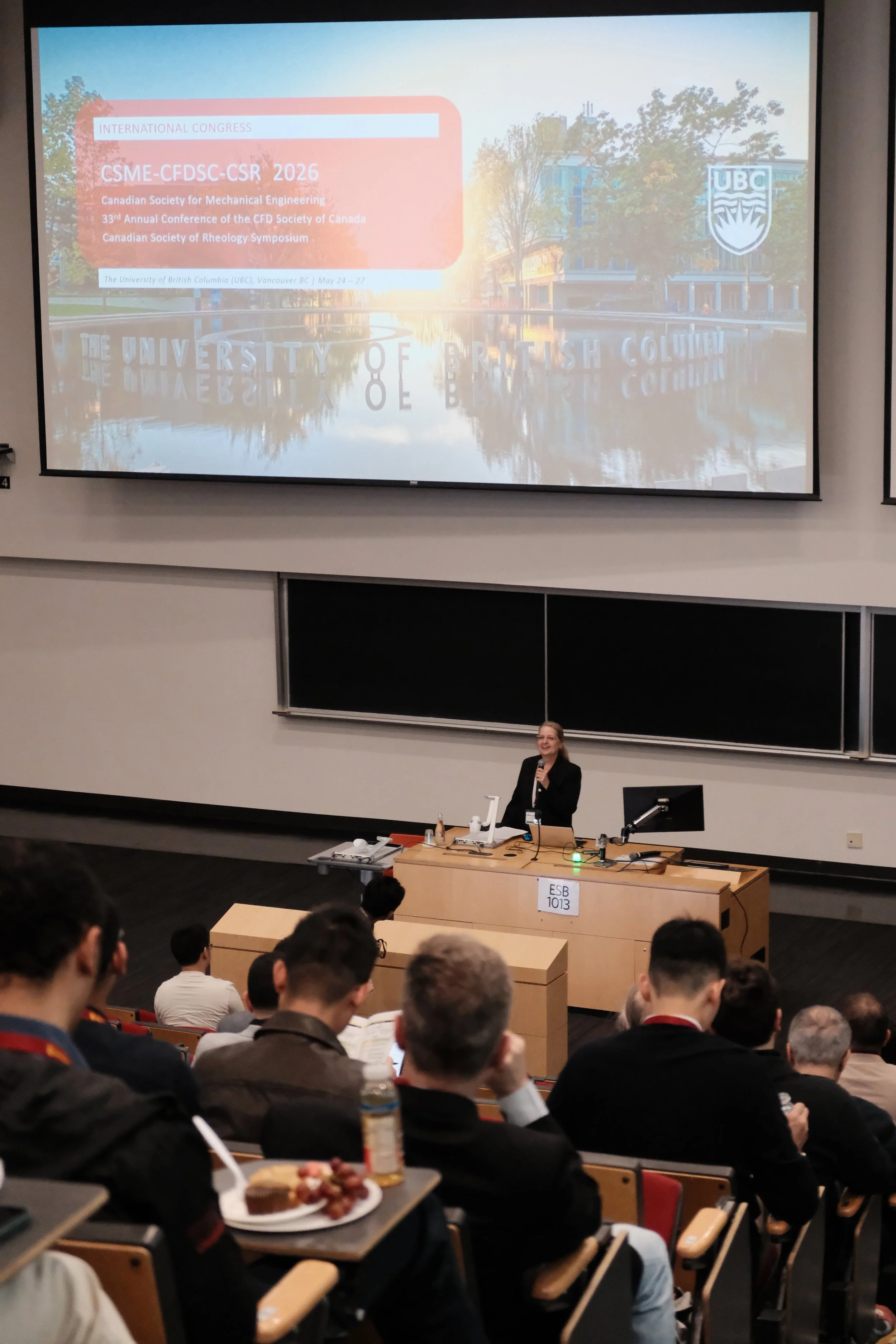
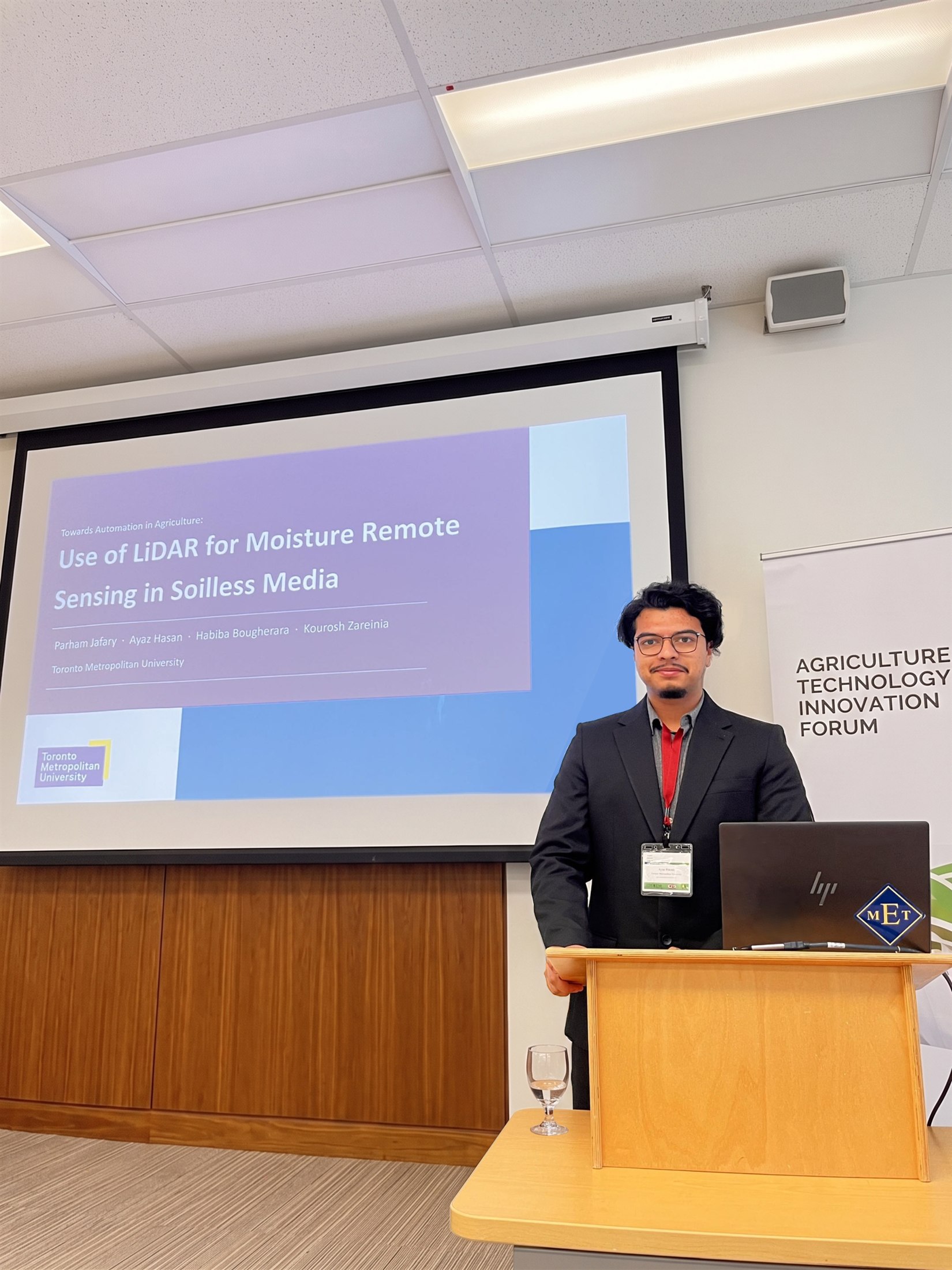
Research assistant in TMU's Haptics and Telerobotics Lab. Our LiDAR moisture-sensing work got published in the CSME-CFDSC-CSR 2026 proceedings, and I flew out to present it at the congress in Vancouver.
The problem
Greenhouses that grow in rockwool need to know how wet each cube is, because watering decisions ride on it. Nearly every existing sensor has to touch or sit inside the substrate, which brings placement sensitivity, local variation, and drift. We asked a simpler question: can a compact LiDAR camera read moisture without touching anything at all?

What we did
An Intel RealSense L515 captured depth and infrared return data from rockwool cubes across a range of water contents. Trials varied ambient light from 0 to 342 lux and sensor distance from 0.5 to 0.7 m, with about 120 frames per trial reduced to summary features in Python. A Ridge regression model then mapped those features to a wetness score from 0 to 100. On held-out data the model landed within 5.8 points on average, with an R² of 0.959.
Publication
The paper, Towards Automation in Agriculture: Use of LiDAR for Moisture Remote Sensing in Soilless Media, appears in the CSME-CFDSC-CSR 2026 congress proceedings. I co-authored it with Parham Jafary, Dr. Habiba Bougherara, and Dr. Kourosh Zareinia, and presented the work at the congress in Vancouver.